How to Find a Life Coach Who Tells You the Truth
You don’t need someone who makes you feel good about staying stuck. You need someone who makes you uncomfortable enough to move.
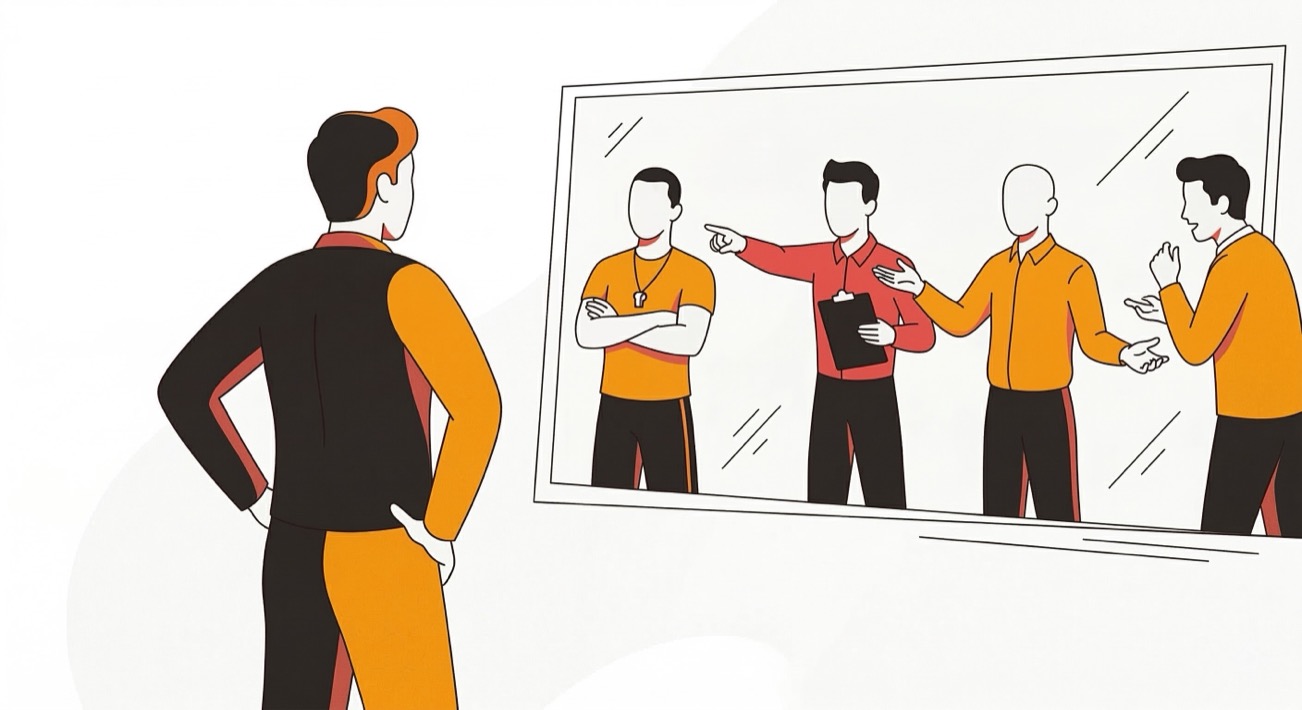
You’ve Been Here Before
You hired a coach. Maybe you spent weeks finding the right one. You showed up, you were vulnerable, you talked about the thing that’s been keeping you up at night.
And what did you get back?
“That’s really valid.”
“It sounds like you already know what to do.”
“Trust the process.”
You walked away feeling heard — but not helped. The same problem is still there on Monday morning. The same pattern shows up in the next relationship, the next job, the next argument.
The problem isn’t that coaching doesn’t work. The problem is that most coaches are financially rewarded for keeping you comfortable. A coach who nods and says “that’s valid” keeps you coming back for months. A coach who tells you what you actually need to hear risks losing you as a client.
So how do you find someone who chooses your growth over their revenue?
You walked away feeling heard — but not helped. The same problem is still there on Monday morning.
5 Signs Your Coach Is Just Being Nice to Keep You
Before you find the right one, learn to spot the wrong one.
1. They never disagree with you
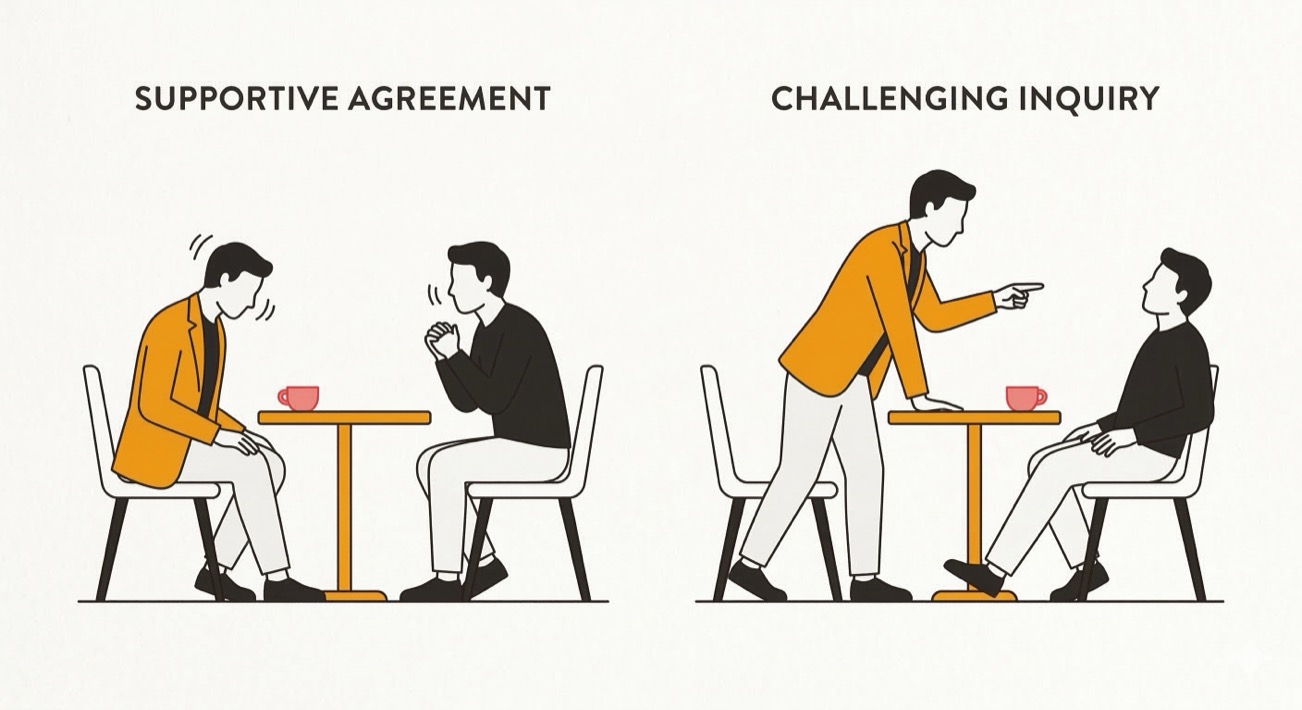
Not once. Not gently. Not ever. If after three sessions your coach hasn’t said something that made you squirm a little, you’re not being coached. You’re being comforted. And comfort is what got you stuck in the first place.
2. They echo your words back to you
“So what I’m hearing is that you feel stuck.” Yes — that’s literally what you just said. A good coach doesn’t parrot. A good coach says: “You say you feel stuck, but from what you’ve told me, it sounds like you’re hiding.”
The difference? One makes you feel understood. The other makes you understand yourself.
3. They celebrate tiny wins while ignoring the elephant
“You journaled three times this week!” Great. Meanwhile you still haven’t had the conversation with your partner that’s been eating at you for six months. Celebrating small process wins while the real issue sits untouched isn’t coaching — it’s distraction with a smiley face.
4. Their entire brand is affirmations
“You are enough.” “Trust the process.” “Your vibe attracts your tribe.” If their social media reads like a motivational calendar, run. People who do serious, uncomfortable work don’t market themselves with posters. They market themselves with hard questions and harder answers.
5. They've never lost a client by being too honest
Ask this directly: “Have you ever told a client something so honest that they quit?” If the answer is no, they’ve never pushed hard enough. The best coaches have scars from telling the truth. That’s how you know they’ll do it for you too.
What It Sounds Like When Someone Actually Helps
Honest coaching isn’t cruel. It’s not someone yelling at you or tearing you down — that’s just abuse with a price tag.
It’s when someone cares more about where you end up than how you feel right now. Because they know that the five minutes of discomfort in a session can save you five years of repeating the same pattern.
“That's a valid feeling”
→ “That feeling is protecting you from something. Let's figure out what.”
“You should trust yourself”
→ “You say you trust yourself, but your actions tell a completely different story.”
“Take your time”
→ “You've been 'taking your time' for two years. At some point, that stops being patience and starts being avoidance.”
The difference isn’t cruelty. It’s precision. A truth-telling coach identifies the exact thing you’re avoiding and puts it on the table — without letting you change the subject.
Even Good Coaches Can’t Be There at 11 PM
Let’s say you find a great coach. Someone who actually challenges you. You meet once a week, maybe twice if you can afford the $150–400 per session.
But the moments when you most need someone to challenge your thinking are almost never during a scheduled Tuesday afternoon session. They’re at 11 PM when you’re spiraling. Sunday morning when you’re drafting that angry text. Right after you’ve just talked yourself into (or out of) something important.
For 167 out of 168 hours each week, you’re on your own — making decisions, rationalizing, falling back into old patterns with nobody to call you out.
This isn’t a problem better scheduling can fix. It’s a problem that requires a fundamentally different kind of coach — one that doesn’t have office hours.
The moments when you most need honesty are never during a scheduled session. They’re at 11 PM when you’re spiraling.

What If the Honest Coach Was an AI?
That’s what AI Burnard is. Not a chatbot that asks how you feel. Not a meditation app. An AI built to do the one thing human coaches are financially incentivized not to do: tell you the truth, every time, with nothing to lose. A year ago this wasn’t possible. Now it is.
And because it’s AI, some things that are hard for humans become structurally guaranteed:
- ✓It literally cannot be incentivized to be nice. A human coach might soften the blow to keep you as a client. AI Burnard has no revenue motive, no ego, no discomfort about making you uncomfortable.
- ✓It doesn’t sleep, and it doesn’t schedule. Midnight on a Tuesday. 6 AM before a hard conversation. The moment you catch yourself spiraling — not three days later when your session finally comes around.
- ✓It has no relationship to protect. Your friends love you — that’s exactly why they won’t say the hard thing. AI Burnard doesn’t need you to like it. It just needs to be useful.
Different Tools for Different Moments
This isn’t about picking one or the other. It’s about knowing what each is good at.
| Human Coach | AI Burnard | |
|---|---|---|
| Deep, ongoing relationship | Yes | No |
| Available when you're spiraling | No | Yes |
| Reads body language | Yes | No |
| Zero incentive to please you | Unlikely | Always |
| Cost | $150–400/hr | Free to start |
| Long-term accountability | Strong | Limited |
| Brutally honest by default | Depends on the coach | Always |
Deep, ongoing relationship
Available when you're spiraling
Reads body language
Zero incentive to please you
Cost
Long-term accountability
Brutally honest by default
The best setup might be both: a human coach for the long arc, and an AI like Burnard for the 11 PM moments when you need someone to stop you from sending that text.
If You Do Hire a Coach, Ask These First
These three questions will tell you more than any testimonial page.
“What would you tell me if I were completely wrong about something?”
If they hesitate, hedge, or say "I'd help you explore that" — keep looking. You want someone who says: "I'd tell you directly."
“Have you ever lost a client because you were too honest?”
You don't want marketing slogans about "honest feedback." You want scars. Stories. Evidence that they've chosen truth over revenue.
“When should I NOT hire you?”
An honest coach knows their limits. If they say "I can help anyone with anything" — that's a red flag the size of a billboard.
One Last Hard Truth
You can find the best human coach in the world. You can open AI Burnard at 2 AM. But none of it matters if your first reaction to hard truth is “they don’t understand my situation.”
The biggest obstacle isn’t finding someone willing to be honest. It’s becoming someone willing to hear it.
The real work isn’t finding a truth-teller. The real work is learning to say “thank you” instead of “but...”
Ready for a conversation that won’t waste your time with empty validation?
Talk to AI BurnardTry freeFree, anonymous, and honest by design — because it’s AI.